Step 1
Assign
Make ownership visible so the next action is clear and accountable.
Nest2App
Secure access becomes trusted execution.
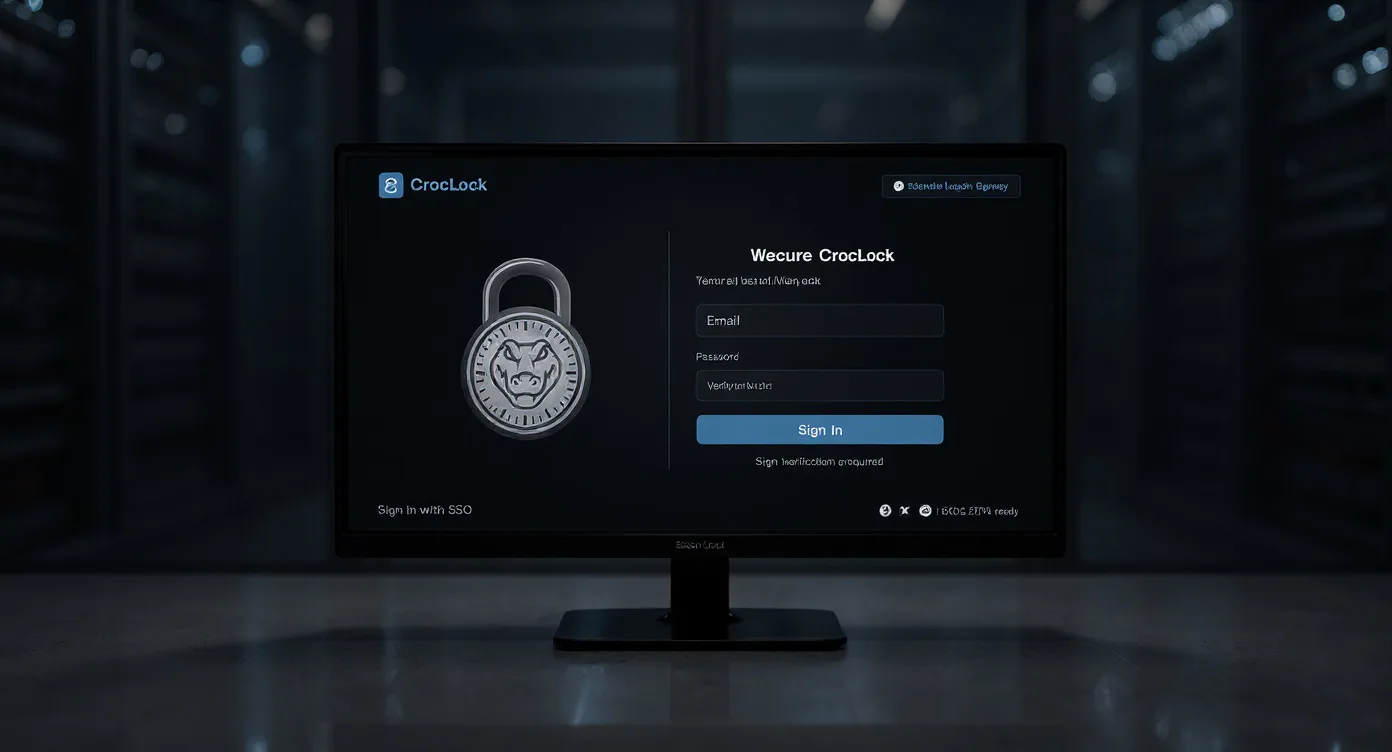
CrocLock is the identity and access layer for the Nest2App execution system. It turns hosted login, enterprise SSO, MFA-ready controls, tenant boundaries, and audit events into trusted execution across every application.
Teams comparing single sign on software, SSO software, and identity and access management use CrocLock when they need secure access becomes trusted execution inside a connected execution system.

What problem it solves
Execution systems fail when users cannot trust access boundaries, role scoping, or the audit trail behind critical actions.
CrocLock is the identity layer for the execution system, securing who can enter, what they can do, and how every sensitive action is recorded.
Primary problems solved
Execution loop
Only the stages that apply are highlighted here, but each one stays connected to the broader Nest2App execution system.
Step 1
Make ownership visible so the next action is clear and accountable.
Step 2
Complete the work through guided workflows, mobile actions, and role-aware tools.
Step 3
Confirm completion, compliance, and quality with proof instead of assumptions.
Step 4
Use trends, reporting, and lessons learned to make tomorrow’s execution stronger.
Who uses it
The process stays consistent. The perspective changes by role.
CEO / Owner
Executives gain confidence that the execution system is governed with stronger access control and auditability.
Manager
Managers can trust that the right people see the right work and that sensitive actions remain reviewable.
Supervisor
Supervisors benefit from cleaner role-aware access and stronger trust in who completed or approved work.
Employee / User
Frontline users get a simpler, more secure sign-in experience with clearer access to the tools they need.
Key features
Use SAML or OIDC with Okta, Azure AD, or similar providers. Map groups to roles to keep management simple.
Scope access per site or business unit. Keep data separated by design and assign least-privilege roles.
Set session lifetimes and optional re-auth for sensitive actions. Review device, IP, and key events in audit logs.
Track sign-ins, privilege changes, and policy updates with timestamps. Export CSV/PDF as needed.
Use cases
One sign-in across Safety, Operations, Training, and more.
Restrict by function, site, and data sensitivity.
Partition data across customers or business units.
Example workflows
Common use cases include Centralized SSO, Least-privilege roles, Tenant separation.
Role-aware sign-in across the platform
A user signs in once, lands in the right role context, and only sees the apps and actions they should have.
Audit-ready identity control
An administrator reviews access history, role changes, and sensitive events without digging across separate systems.
“Centralizing identity with CrocLock simplified audits and kept our units cleanly isolated.”
Reporting / visibility
CrocLock supports sign-in history, role-change visibility, audit-event exports, and the trust layer behind the rest of the ecosystem.
FAQ
Yes. CrocLock supports both SAML and OIDC with major IdPs.
Yes. Roles can be limited by tenant, site, or business unit.
Yes. Key events are time-stamped and exportable as CSV/PDF.
No. CrocLock centralizes identity controls and audit events. For legal or regulatory interpretation, consult your compliance and legal advisors.
Next step
CrocLock unifies sign-on, enforces role-based access, and preserves the audit trail that helps teams trust the system.