Step 1
Identify
Recognize a need, risk, inspection point, asset issue, task, incident, training gap, or compliance requirement.
Safety
Incidents and hazards become corrective action.
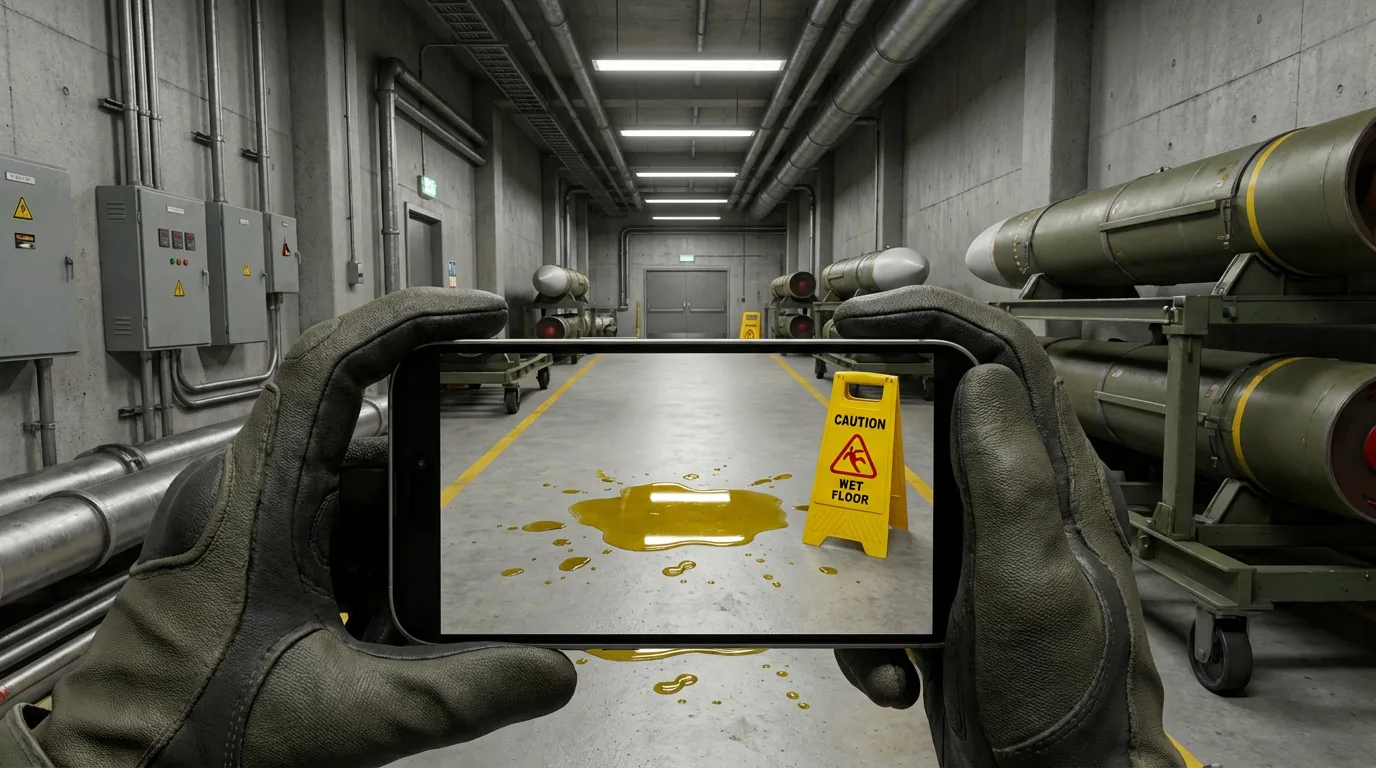
SnapSafe turns hazards, incidents, and frontline safety signals into visible corrective action. Workers report what happened with context, Safety triages quickly, and the right team gets assigned before the issue disappears into email or memory.
Teams comparing hazard reporting software, incident reporting software, and safety reporting app use SnapSafe when they need incidents and hazards become corrective action inside a connected execution system.

What problem it solves
Safety issues are often reported late, routed inconsistently, or lost between the moment of discovery and the moment of action.
SnapSafe keeps risk visible from first report through triage, assignment, proof, and trend analysis inside the broader execution system.
Primary problems solved
Execution loop
Only the stages that apply are highlighted here, but each one stays connected to the broader Nest2App execution system.
Step 1
Recognize a need, risk, inspection point, asset issue, task, incident, training gap, or compliance requirement.
Step 2
Capture the information clearly at the source so it can move through the system.
Step 3
Make ownership visible so the next action is clear and accountable.
Step 4
Complete the work through guided workflows, mobile actions, and role-aware tools.
Step 5
Use trends, reporting, and lessons learned to make tomorrow’s execution stronger.
Who uses it
The process stays consistent. The perspective changes by role.
CEO / Owner
Executives see leading indicators of risk, repeat patterns, and how quickly teams are closing safety issues.
Manager
Managers see what was reported, who owns the response, and which issues are overdue or escalating.
Supervisor
Supervisors use SnapSafe to capture field issues fast, route them clearly, and keep follow-up moving.
Employee / User
Frontline users report hazards, incidents, and unsafe conditions with simple mobile capture and clear escalation.
Key features
Report emergencies instantly or capture hazards on the spot. Every submission is logged, preserved, and routed to Safety immediately—so response is quick, evidence isn’t lost, and patterns are tracked over time.

Every report arrives with full context—media, time, and location—so Safety can quickly confirm severity and direct the right response: alert, escalate, or route to the appropriate team.

Once triaged, work is sent where it belongs. Tasks move forward with clear ownership, updates, and reminders—ensuring nothing stalls and every issue is fully resolved.

Every alert keeps its story: media, actions, timestamps, and acknowledgments. Export clean records in minutes.
Use cases
Machine guards, LOTO, leaks, housekeeping.
Fall risks, trenching, energized work, equipment.
Racking damage, forklift paths, spills, blocked egress.
Containment, valves, PPE compliance, confined space.
Sanitation, temperature control, cross-contamination.
Public areas, utilities, grounds, maintenance hazards.
Example workflows
Common use cases include Manufacturing & Fabrication, Construction & Field Services, Warehousing & Logistics, Energy & Chemicals, Food & Beverage, Municipal & Facilities.
Hazard to corrective action
A worker captures a hazard, Safety reviews it, ownership is assigned, and the corrective action stays visible until closeout.
Incident reporting with proof
A near miss or injury is reported with context, routed to the right leaders, and preserved for review and improvement.
Connected apps
This application is one mechanism inside the larger execution system. These are some of the tools it works alongside.
“Routing through Safety first changed everything—faster decisions, safer responses, and clearer proof when auditors ask.”
Reporting / visibility
SnapSafe feeds leadership and management views with incident trends, response times, open actions, repeat conditions, and proof of closeout.
FAQ
Yes. Every report—Emergency or Hazard—is instantly routed to Safety with full context, enabling rapid triage and response without delay.
Yes. Photos, details, time, and location are automatically captured and stored with each report—ensuring nothing is lost and every event is fully documented.
All reports are logged and structured, allowing teams to track patterns, spot recurring risks, and take proactive action before incidents escalate.
Yes. SnapSafe works offline, securely storing reports and syncing them automatically once a connection is restored.
Safety remains in control. They review each report, confirm severity, and route work to Maintenance or the appropriate team with full context.
No. SnapSafe strengthens documentation, response, and visibility. For regulatory interpretation and obligations, consult your EHS or compliance advisors.
Next step
Use SnapSafe to capture risk quickly, assign the next action clearly, and preserve the record that proves the response happened.